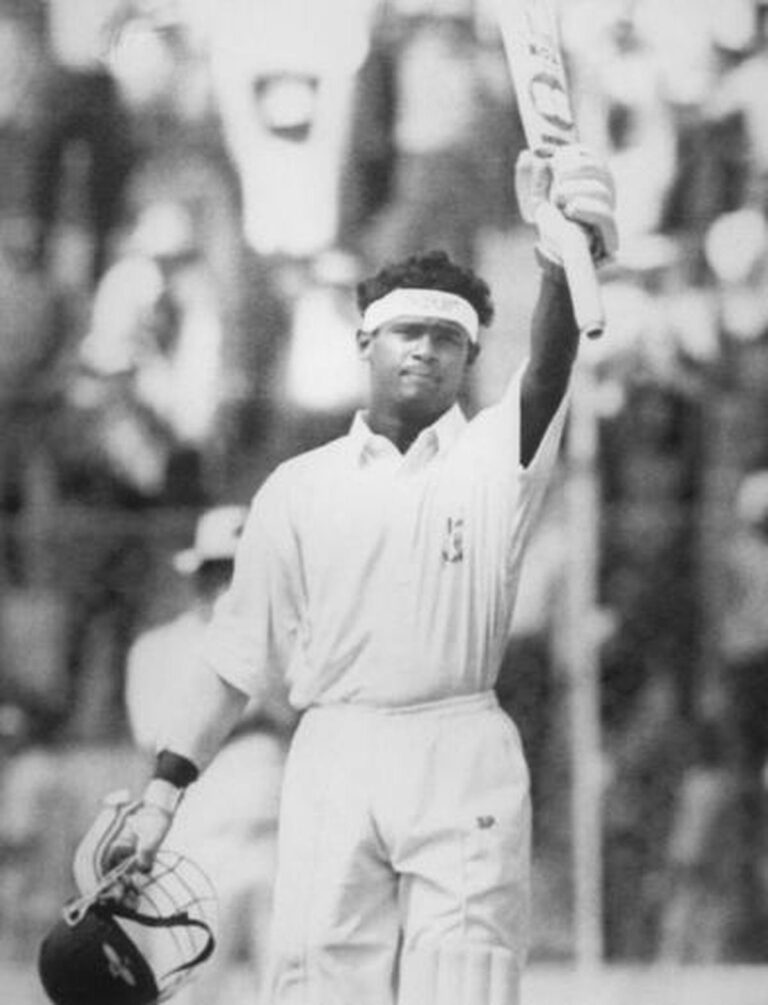
Adam Gilchrist : The silky marauder
For decades, the cricketing world measured the tempo of a Test match by the steady, rhythmic ticking of a grandfather clock. It was a game of attrition, of steely resistance, where the nobility of the craft was found in the leave outside off-stump and the grim survival of the morning session. Even the giants of the archival past, the likes of Jack Hobbs or Wally Hammond, understood that the game required a slow, patient weaving of the tapestry.
Then came the Gilchrist Hurricane.
When Australia arrived at the Bullring in Johannesburg in February 2002, the air was thin, the pitch possessed a lively hum, and the South African pace attack—led by the relentless Allan Donald and the tall, intimidating Makhaya Ntini—was ready to wage a war of nerves. At 293 for 5, the match hung in a delicate balance, a classic tug-of-war between two titans.
The stage was set for a technician. Instead, it received a marauder.
As Adam Gilchrist strode to the crease, he didn’t just carry a bat; he carried a lightning bolt. While others sought to negotiate the conditions, Gilchrist sought to dismantle them. With an aristocratic disdain for the “corridor of uncertainty,” he began a counter-attack that felt less like a sporting innings and more like a glorious massacre of the status quo.
Every time Donald slanted the ball across him, the response was a flamboyant audacity. A swivel of the hips, a crisp crackle of the wood, and the ball was bludgeoned through mid-wicket. When Ntini tried to bounce him out, Gilchrist waded into the delivery, his pull shot a symphony of kinetic energy that sent the ball bounding toward the boundary boards.
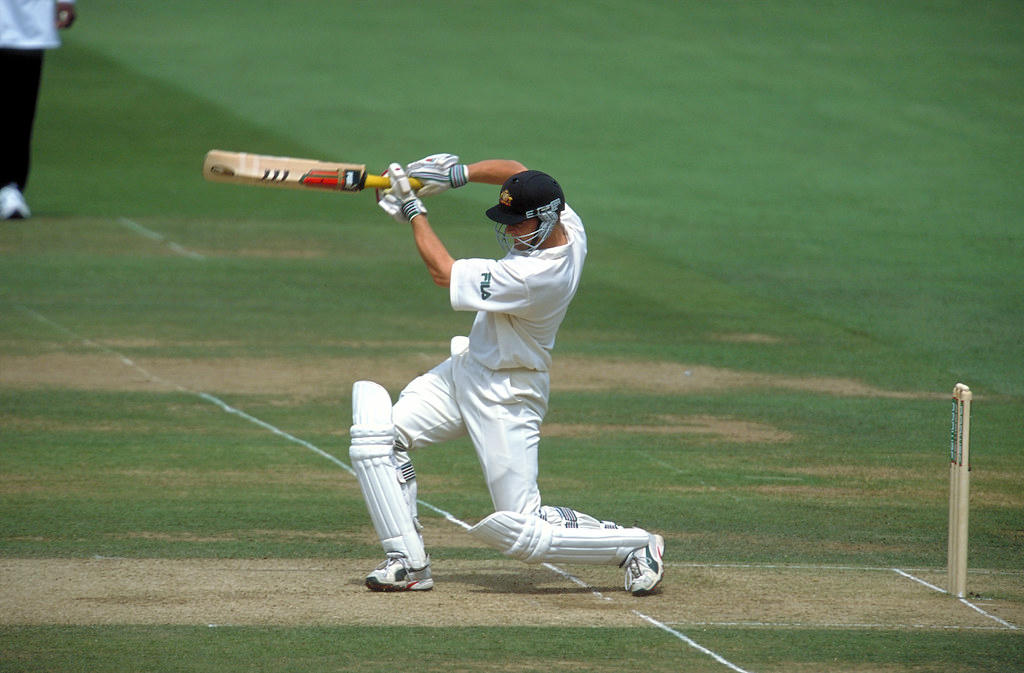
This was not cricket; it was high-octane art.
The South Africans were not merely beaten; they were bewildered. The traditional battle of wits had been replaced by a blitzkrieg. Gilchrist moved past fifty, then a hundred, and yet the tempo never wavered. It was as if he were playing a different sport, one where the boundaries of the field were merely suggestions.
As Neville Cardus once wrote of the great stylists, “The scorecard tells us the price of things; it does not tell us their value.” The value of this particular innings lay in its sheer, unadulterated valiance.
When he reached 200—the fastest double-century in the history of Test cricket at the time, off just 212 balls—the Johannesburg crowd stood in stunned reverence. He had put the world’s best attack to the sword in their own backyard. The “Bullring” had seen many matadors, but never one who dispatched the bulls with such celebratory ease.
He finished unbeaten on 204. A scorecard that looked like a typographical error in the context of a five-day match.
By the time the dust settled, Gilchrist had redefined the very geometry of the game. He proved that one could be both a blacksmith and a jeweler—shattering records with brute force while maintaining the delicate spirit of a match-winner. He didn’t just win a game; he shifted the axis of the sport forever.
Australians have produced many knocks which have taken one’s breath away. This one from Adam Gilchrist was up there with the likes of Stan McCabe’s blast the the SCG in the Ashes and the stunning Bradman 270 in 1937.
As the legendary Richie Benaud remarked in his characteristic dry tone, perfectly capturing the weight of the moment: “It was an innings of absolute, pure brilliance. I don’t think I’ve ever seen anything quite like it.”
There couldn’t have been a better compliment for the man who broke the clock.
=====